Showing posts with label Gianfranco Ferre. Show all posts

Monday, 8 October 2012

Natalia Vodianova in Harper’s Bazaar 2003

harpers-bazaar-december-2003-natalia-vodianova-5

And so today Natalia is back on the blog wearing Fendi, Jil Sander, Prada, Cavalli, Dolce&Gabbana, Etro, Armani, Ferre and MaxMara photographed by Glen Luchford for the December 2003 issue of Harper’s Bazaar.

harpers-bazaar-december-2003-natalia-vodianova-2

harpers-bazaar-december-2003-natalia-vodianova-4

harpers-bazaar-december-2003-natalia-vodianova-1

harpers-bazaar-december-2003-natalia-vodianova-3

harpers-bazaar-december-2003-natalia-vodianova-6

harpers-bazaar-december-2003-natalia-vodianova-7

harpers-bazaar-december-2003-natalia-vodianova-8

harpers-bazaar-december-2003-natalia-vodianova-9

Photo source: Harper’s Bazaar US December 2003

Sunday, 1 July 2012

Gianfranco Ferre: at Dior and beyond

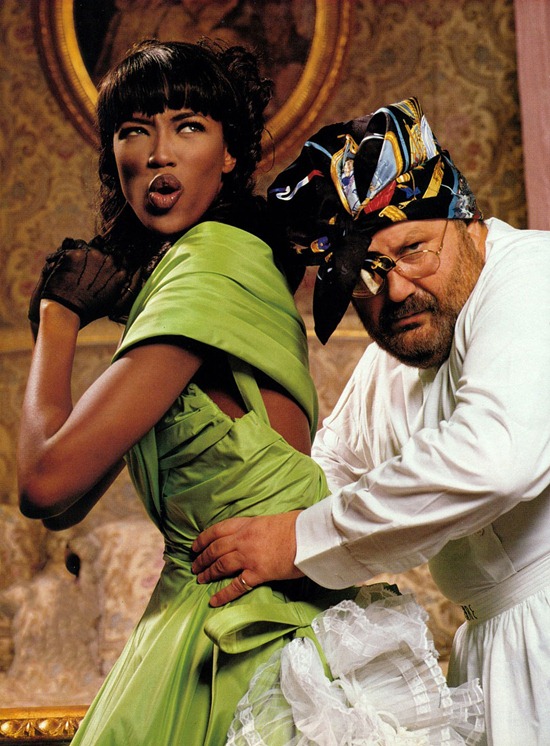
vanity fair may1996

“Great couturier who knew how to create absolute chic with details that will remain a part of the history of fashion."

Donatella Versace

After establishing his own label, Ferre continues working on elaborate beautiful collections and becomes one of Italy’s most treasured fashion designers alongside Valentino and Armani.

In 1983 he joins the Domus Academy as founding Professor of the Department of Fashion Design.

In 1984 the first fragrance, Gianfranco Ferre, a powdery combination of floral and woody notes, is launched, followed by five other perfumes that accompany new women’s and men’s wear collections. Being true to his philosophy and an absolute perfectionist, Ferre designs each flacon himself.

That very same year the designer receives an offer to become an artistic director for the house of Dior. Ferre declines thinking of the time and attention needed for his own label that he is successfully growing.
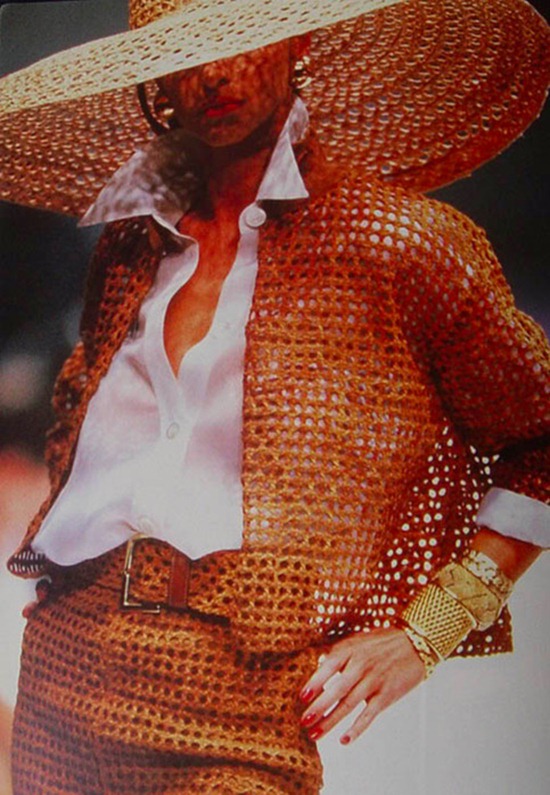
gianfranco ferre spring1991

On 22 July 1986 he shows his first Haute Couture collection in Rome. It includes 70 looks linked together by a harmony of classic colours: grey with white, red and black accents. Beautiful rich fabrics, embroidery, crystals, fur, crocodile skin – luxury without borders ruled by imagination and sculptural shapes. It was a triumph.

In spring 1989 LVMH Chairman Bernard Arnault approaches Ferre again and this time, in May 1989, after spending an enormous amount of time in Dior archives, Gianfranco Ferre finally agrees to design for Dior. In many ways, his move to the French fashion house was, in a way, a scandal. French people struggled to see an Italian, however talented he was, as a new Dior designer. Until that very moment no foreign designer was allowed such a thing. In his interview, Pierre Bergé, the chairman of Yves St Laurent, observed: "I don't think opening the doors to a foreigner - and an Italian - is respecting the spirit of creativity in France."

As it turned out, Arnault couldn’t have chosen  a better candidate to replace Mark Bohan. With his deep understanding of fashion history, the meaning of the Maison Dior as an integral part of national identity, caring attitude to details and love of all things luxurious and beautiful, Ferre was incredibly careful about his work for the house. 

His muse at Dior was Eva Perón, who had been one of Dior's original customers.
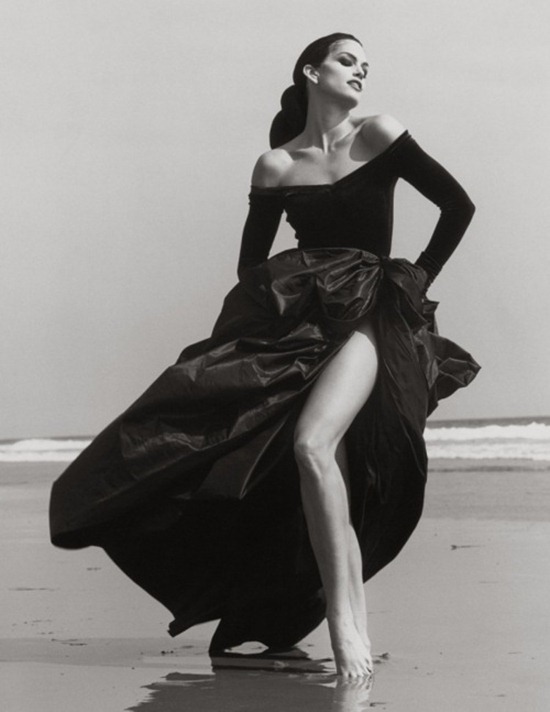
gianfranco ferre campaign 1993 ritts

Later Ferre himself wrote: “It was an adventure on which it was not very easy to embark, but that turned out to be extraordinary, for my professional and creative development no less than for my human and personal one.

The most prestigious maison de couture in France was a temple of rituals, traditions, codes of conduct and rules, perhaps unwritten but no less hard and fast, no less binding for all that.

For weeks I studied, analysed and “breathed” his style. And so I discovered affinities and analogies… that made it possible for me to meet the challenge – between my way of understanding and interpreting elegance and that of Monsieur Dior.

My adventure “chez Dior” proved to be an extraordinary opportunity for growth and fulfillment.”
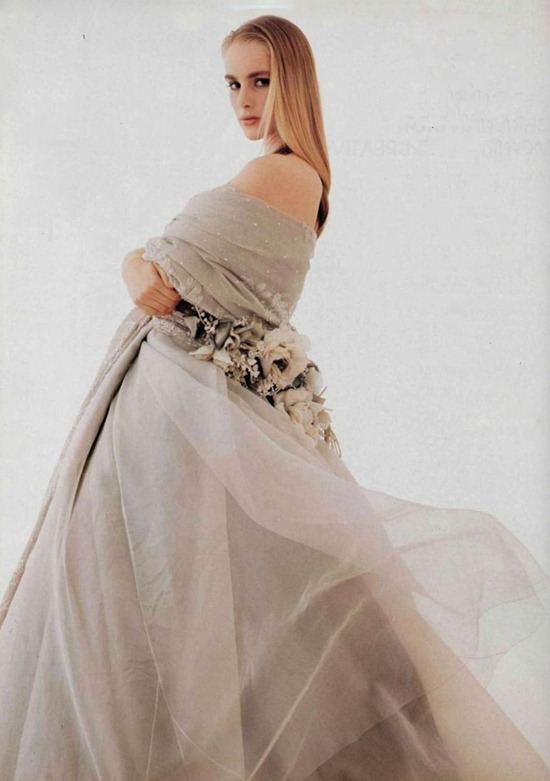
gianfranco Ferre dior 1989 editorial

His first Haute Couture collection that was shown in July 1989, just two months after Ferre’s arrival to Dior, won him Dé d'Or award for the best Paris collection of the year. 

“The tailor of two cities” lived between Paris and Milan, on and off the plane, as the languages blended into a musical daydream and the cities became an endless source of inspiration – two mentalities, modern and sober Milanese pret-a-porter and deeply understood and appreciated luxury of Parisian fashion.

Weekend were often spent in Stresa, his home in lake Maggiore, near Milan. It was a house of an architect. Every single detail, every item, were placed in a special order to the point of absolute perfection: every item from his collection, every small box, every vase were placed in a strict symmetry.

Even the garden was immaculate designed according to the Lago Maggiore rules and looked after by a gardener. There was never a stray twig or grass. Just roses, dozens and dozens of them. The blooms were always cut off a few days before they would drop their petals on the ground, to avoid any mess.

Ferre remained at Dior until autumn 1996 when his contract ended by mutual agreement. His last Haute Couture collection for the house, Passion Indienne, was inspired by the most treasured memories of his life.
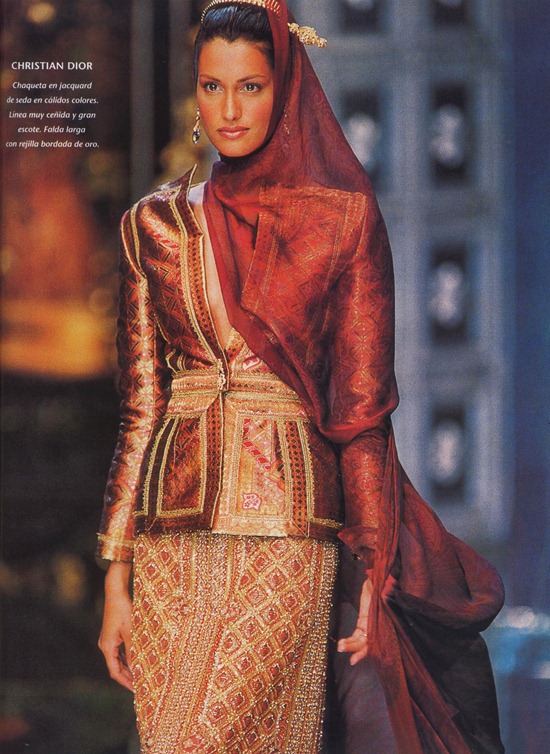
christian dior couture fall winter 1996 97-1

He returns to Milan and, after renovating a palazzo on the Via Ponaccio to become the company headquarters, continues producing new collections under his own name.
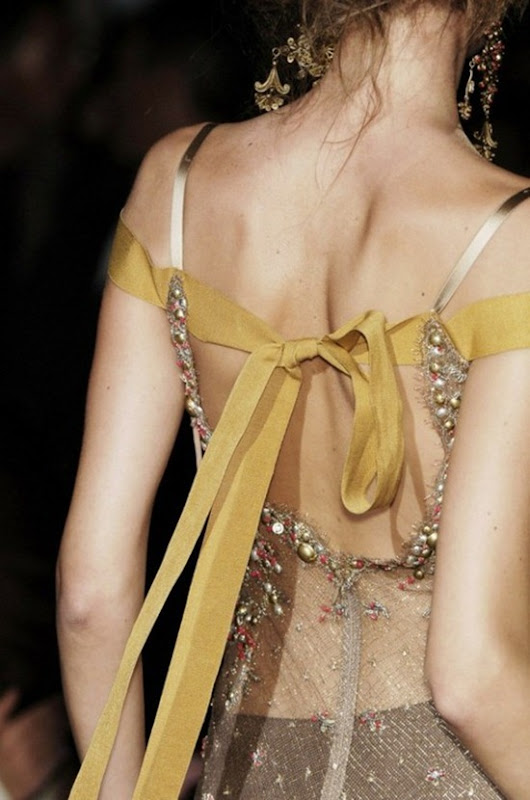
 gianfranco ferre spring2001

He died suddenly. On Sunday, 17 June 2007, in San Raffaele Hospital in Milan, after suffering a massive brain haemorrhage.

Sources: Janie Samet, Chère Haute Couture, Gianfranco Ferre: Lessons in Fashion, Maria Vittoria Alfonsi Gianfranco Ferré. L'architetto stilista.

Photo source (top picture): Vanity Fair 1996

Friday, 29 June 2012

Gianfranco Ferre

gianfranco ferre young

Who would have thought that a boy born on 15 August 1944 in Legnano would one day become a fashion legend. Gianfranco Ferre grew up in a traditional family: a father who was a successful engineer working hard to support his family, a wife and two sons. Luigi Ferre did quite well for himself, so the family could afford a few little luxuries, giving Gianfranco a taste for all things beautiful and elegant.

Although the little boy shared his date of birth with Napoleon, his family had very humble plans for the boy’s future. His father saw him as a pharmacist, a job little Gianfranco really wanted to do, while one of his aunts pictured him as a priest.

Still, Gianfranco wasn’t making any plans yet. His childhood was spent playing with his brother Alberto and their school friends, visiting a tailor with his father or helping his aunt Adele in her atelier. It was truly a carefree time.

Things changed when Gianfranco’s father passed away and the quiet boy suddenly took up a new role of taking care and supporting his family – mother, aunts Rina and Virginia and his brother.

At 16 he won a painting competition hosted by Famiglia Legnanese. That oil picture from 1960 was the only one Ferre ever painted in his life. Perhaps it was then when he realised that pharmaceuticals weren’t for him.

Despite family’s expectations, he chose a different path – to study architecture at Milan Polytechnic Institute. Still a student, he became interested in jewellery design and began making leather, metal and plastic bijoux to experiment with new materials and shapes. He created a small collection for Rosy Biffi and Franco Limonta, collaborated with Walter Albini, the Yves Saint Laurent of Italian fashion, and by 1971 was designing jewellery for Elio Fiorucci and Karl Lagerfeld.

The world of architecture was replaced with the grandeur of fashion.

Ferre didn’t make any plans about his own brand or fashion house. Instead, while working for Giorgio Borelli and the line “Ketch”, he went off to India to find inspiration and learn more about colours and materials. He was fascinated by the country of “a thousand faces and a thousand souls” and found it both magical and complex. It was in India where Ferre found and understood his love for a whole range of colours created out of yellow, red and fuchsia, the shapes of sari with a meaning in every fold, the natural relationship between the body and the garment. It was a lesson in elegance, a strong reference that the designer used throughout his career.

He mixed the present and the past, histories of different countries and continents, the reality and his dream world. He understood the importance of fashion evolution that required all those elements in order to move forward and believed that without the East and its charms and ideas, “Western civilization would have been doomed to oblivion or dismissed as primitive curiosities”.

Upon return from his travels, Gianfranco Ferre designed his first collection in 1974 under label “Baila by Ferre”. It was the first time Ferre introduced the white shirt that has since become his signature item.

In 1978 Giorgio Borelli who has became Gianfranco’s good friend, drawn while travelling in Goa. Struggling to cope with a loss of his dear friend and business partner, Ferre ended his relationship with Borelli and established his own label, “Gianfranco Ferre”. His first ready-to-wear collection made of simple lines reflected both femininity and power and was appreciated by women. His attention to form, structure, materials, colours and innovative techniques including laser cutting, got him nicknamed the Frank Lloyd Wright of fashion.

In 1982 Ferre received his first Occhio d'oro award and more soon followed, in 1983, 1986, 1987, and 1989. During those years he was also awarded the "Modepreis" in 1985, the Cutty Sark Men's Fashion Award in 1985, and the "Milanese dell'anno" in 1989.

To be continued…

Thursday, 28 June 2012

Gianfranco Ferre jewellery

gianfranco-ferre-ad-campaign-fall-autumn-winter-1994-1995-tyen

“Jewellery is one of the most important expressions, a flexible and versatile way of translating ideas and emotions into reality. Or bringing dreams to life.”

Gianfranco Ferre

Jewellery was Ferre’s first love and never ending passion. A hobby inspired by his fascination with precision, craftsmanship, forms and materials was a way to express his vision of beauty.

He began making jewellery while studying architecture spending his time moulding and combining leather and metals into bracelets and belts that he would then give to friends as presents.

His future changed when his childhood friend Isa Bertolini introduced him to Rosy Biffi and Franco Limonta, the owners of Biffi, the most popular Milanese boutique. The couple then approached him with an offer for designing a small collection of leather accessories, which he first refused thinking about his upcoming exams, but eventually agreed to.

A few weeks later Isa’s sister, Luciana Bertolini was spotted at a fancy party wearing a leather bracelet made by Ferre. The accessory caught attention of Anna Piaggi, an editor of Italian Vogue, who quickly sensed a new talent and immediately contacted Ferre asking if he would be able to design a few pieces for the upcoming New York photoshoot.

And so, from bijoux to jewellery, his journey as a designer has began. Ferre stopped working as an architect and completely devoted himself to his new project.

The more he learned and saw, the more elaborate his pieces became. Influenced by West and East, history and places, he would sculpt the jewellery from gilded metals, painted wood, paste, semi-precious stones, tulle and sequins assigning each creation with a symbol, an ornament of India, China, Japan or the Amazon forest.

Everything he designed was “linked to the “physicality” of human form”, focusing attention on the key points of the figure: a long neck, shoulders, wrists and waist. The pieces were placed strategically to construct the body, lengthen it, add a touch of sensuality with a tinkling of bracelets, a necklace that caressed the neck or a wide belt that would mark the movement of the hips.

He saw jewellery as a mirror of the clothing, one impossible without the other, but at the same time, as individual as a woman who wore it. In its most opulent form, the cascades of precious stones and beads laid over a bare flesh would replace a part of an outfit, becoming an item of clothing – it was a beautiful extreme, a totally new vision.


Photo source: Gianfranco Ferre Jewellery Campaign Fall/Winter 1994-1995

Wednesday, 27 June 2012

The white shirt

gianfranco ferre spring 1994 campaign nadja

Every good designer has a signature item. For Gianfranco Ferre it was the white shirt that he produced in hundreds and hundreds of different designs seeking the naturalness that suited female body. The garments often made of taffeta, organza and silks were light, almost weightless, with the fabric moving around every curve as if caught in the whirl of a gust of wind, accentuating the shoulders and waist, but never taking away the sense of freedom.

An architect in Ferre desired simplicity, precision of cut and origami inspired forms, while Ferre, the aesthete and romantic, looked for inspiration in Renaissance and often used lavish details as decorative touches.

In one of his lectures Ferre said that his “blouses in particular, may retain deliberate traces of opulence, large and emphatic volumes, but are always endowed with a lightness that liberates from any sense of encumbrance and constriction.”

On 25 June 2007, just a week after his death, his last ever men’s wear collection show was closed with children dressed in oversized white shirt as a tribute to the designer who always believed in purity and, as he often put it, rational dreams.

Photo source: Gianfranco Ferre Spring 1994 campaign

Tuesday, 26 June 2012

Stylish quote

vogue spain april2004 seman

“Fashion lives in reality. It is an expression of it, drawing its contents from it.

Fashion cannot be a sterile cult of the past. Rather it is an extraordinary expression of love for the past and for tradition. An avowed love of what tradition is able to transmit and communicate to the sensibility of today.”

Gianfranco Ferre

Photo source: Vogue Spain April 2004

Monday, 25 June 2012

Gianfranco Ferre Fall 2004 campaign

gianfranco ferre ad campaign 4

It’s time for a fashion week. This time it’s dedicated to the one and only architect of fashion, six-time winner of the prestigious Occhio d'Oro as best Italian designer and the De D'Or as couture designer, Gianfranco Ferre.

There were a few good reasons for me to write about him. I’ve admired the man since I was very young. He was, in fact, one of the few designers I was aware of as a teen and my very first perfume coincidently was by Gianfranco Ferre, so just a mention of his name brings back beautiful memories.

But the most important reason was to highlight the importance of his work both for his own label and Christian Dior and the impact he made on fashion history.

Lets start the journey with a few shots from a beautiful Gianfranco Ferre Fall 2004 campaign featuring Louise Pedersen photographed by Patrick Demarchelier. I chose it because each look had such a timeless appeal. I loved the styling on the first and third photos – long sleeves of the sweater, classic trench, rolled-up trousers, classic pumps, short sleeved jumper worn with a pencil skirt and white shirt. The clothes photographed in a way that make you want to live through those moments and, of course, dress a part. Head to toe in Gianfranco Ferre.

gianfranco ferre ad campaign 1

gianfranco ferre ad campaign 3

gianfranco ferre ad campaign 5

Photo source: Gianfranco Ferre Fall 2004 campaign

via bwgreyscale.com